
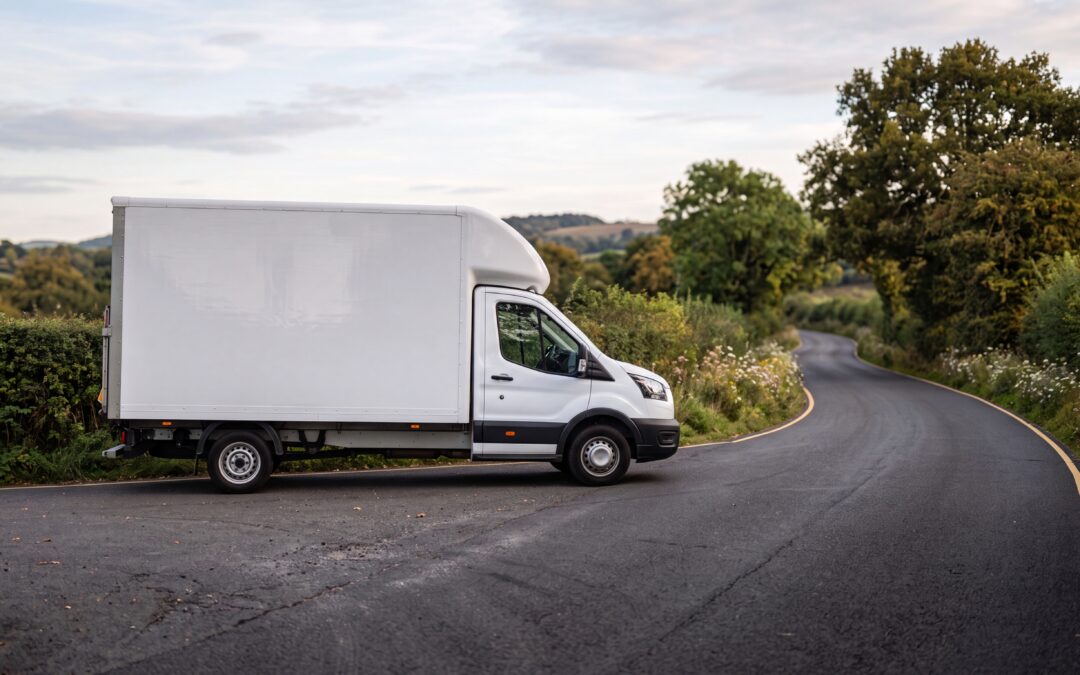
Whether you are relocating to a new home or transporting substantial commercial cargo, driving a Luton van is often the most practical solution. Characterized by its spacious box-shaped cargo area that extends over the driver’s cab, the Luton van offers unparalleled volume and utility. However, for those accustomed to standard passenger vehicles, transitioning to a commercial vehicle of this scale demands a thorough understanding of licence specifications and essential safety protocols.
Licence Requirements for a Luton Van
A common misconception is that operating a vehicle of this size requires a specialized commercial driving licence. In the United Kingdom, you can drive a standard Luton van on a standard Category B (car) licence, provided the vehicle’s Maximum Authorized Mass (MAM)—also referred to as the Gross Vehicle Weight (GVW)—does not exceed 3,500kg (3.5 tonnes). Virtually all light commercial Luton vans, including those available through our comprehensive Luton van hire in Essex, fall precisely within this limit.
While the vehicle itself complies with Category B regulations, you must remain cognizant of the payload weight limit, which is typically around 1,000kg (1 tonne). Overloading the van beyond its 3.5-tonne GVW is illegal, compromises braking efficiency, and invalidates your insurance. If you are organizing a house move from Loughton to Upminster, distribute your cargo evenly to maintain vehicle stability and adhere to legal weight limits.
Mastering Spatial Awareness and Dimensions
The primary challenge when driving a Luton van is managing its physical dimensions. Unlike a car, a Luton van possesses a high vertical profile and a wider track, requiring a proactive approach to spatial awareness:
- Height Clearance: Standard Luton vans typically measure between 3.0 and 3.3 metres in height. It is imperative to check cab display stickers for the exact height and remain highly vigilant of low bridges, overhanging trees, and restricted-height car parks.
- Width and Mirrors: The extended box body is wider than the cab. You must rely entirely on your side mirrors, as there is no central rear-view mirror. Regularly scan both mirrors to position yourself centrally within your lane.
- Tail Swing: Because of the long rear overhang behind the rear axle, the back of the van will swing out in the opposite direction when turning sharply. Minimize tight, rapid manoeuvres to avoid striking stationary objects or pedestrians.
Key Safety Practices on the Road
Operating a larger vehicle requires you to adjust your driving style to compensate for increased weight and wind resistance. When driving on fast dual carriageways or open motorways, the flat sides of the Luton van act like a sail. High winds can cause sudden lateral movement, demanding a firm grip on the steering wheel and reduced speeds.
Braking distances are significantly prolonged when the vehicle is fully laden. Maintain a generous following distance—at least double the standard gap—between yourself and the vehicle ahead. When navigating corners, decelerate before entering the turn to prevent the high centre of gravity from causing excessive body roll.
Reversing presents the greatest hazard due to the blind spot directly behind the vehicle. Whenever possible, utilize a passenger as a spotter to guide you from a safe, visible position outside the vehicle.
Securing Cargo and Using the Tail Lift
Unsecured cargo can shift during transit, affecting the vehicle’s handling or causing damage. Utilize tie-down straps to secure heavy items against the internal bulkhead. If your hire vehicle features an electric tail lift—available at our regional hubs including Basildon, Brentwood, Harlow, Dunmow, and Stansted—ensure you operate it on level ground, keep your feet clear of the platform, and never exceed its rated capacity.
By understanding the licence criteria and adjusting your driving habits to accommodate the van’s physical proportions, driving a Luton van can be a safe and highly efficient experience.
